Digital Tyre Pump Explained: A UK Buyer's Guide
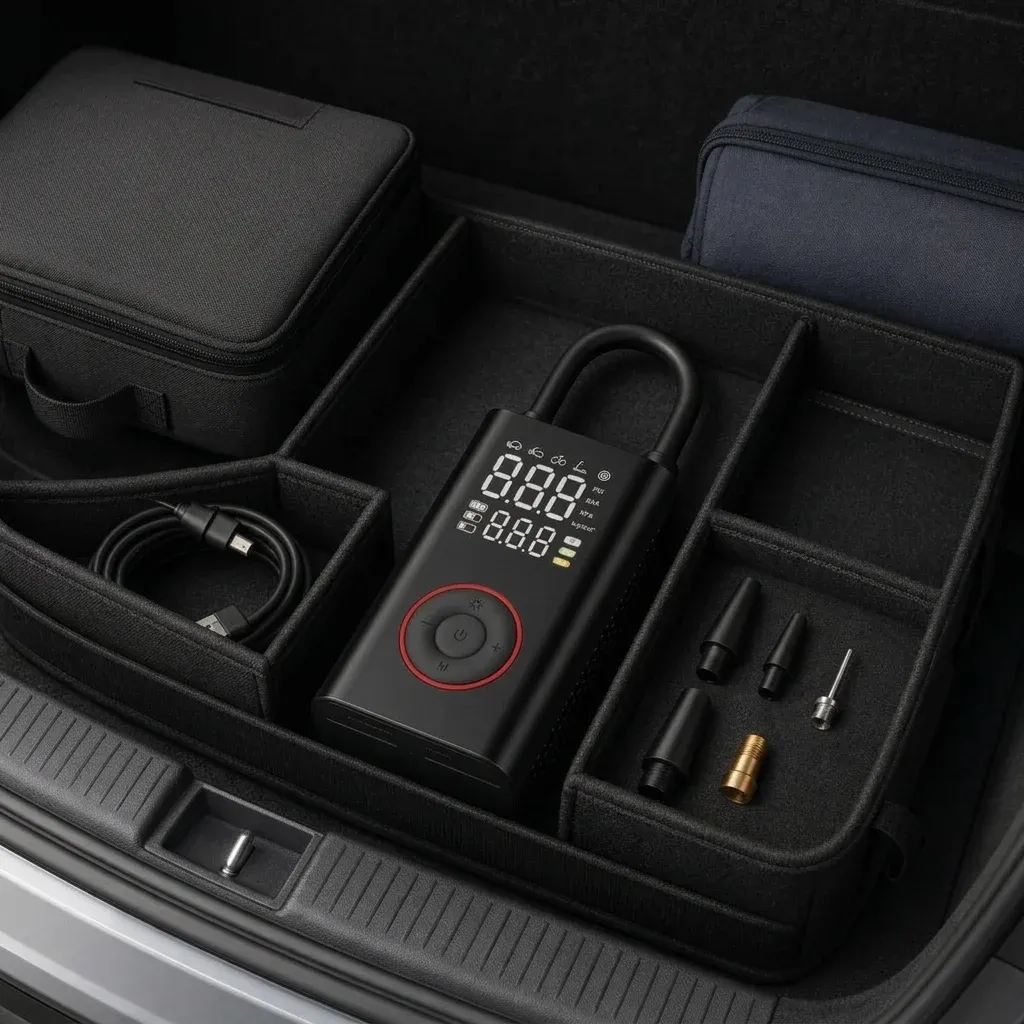
Key Takeaways
- A digital tyre pump removes guesswork by showing a clear pressure reading and stopping automatically at your preset PSI.
- A cordless model gives you far more freedom than a tethered 12V compressor, especially on tight UK streets or in awkward parking spaces.
- According to UK guidance, you should inflate tyres to the vehicle manufacturer's recommended pressure, not the maximum number on the sidewall.
- Regular tyre checks can support safer braking, better fuel economy and more even tread wear, which matters for MOT readiness.
- Modern digital pumps can usually handle car tyres, bicycle valves and sports equipment with the right adapters.
TL;DR: A digital tyre pump is a cordless, battery-powered inflator with a digital display and auto-stop function, so you can set the exact pressure and fill tyres accurately at home or on the road.
If you want a simple way to maintain correct tyre pressure, a digital tyre pump is one of the most useful tools you can keep in the car. It lets you inflate tyres accurately without relying on a forecourt compressor or a 12V cable, and it is especially handy for UK drivers who want quick, repeatable results.
Why does tyre pressure matter for UK drivers?
Standing on a damp petrol station forecourt in the middle of November, feeding coins into a tired air machine with an unreadable dial is a distinctly British motoring experience. However, it is no longer the only option. As vehicle maintenance has become more convenient, more drivers are replacing cumbersome, tethered compressors with compact cordless alternatives.
Based on our testing at Cordless AI, the biggest benefit is not just convenience; it is consistency. A digital tyre pump makes it far easier to check pressures regularly, which means less guesswork, fewer missed top-ups and a better chance of keeping your tyres within the correct range.
According to the UK road safety charity TyreSafe, more than half of all tyres on Britain's roads are under-inflated. That matters because under-inflated tyres can increase stopping distances in wet conditions, wear out faster at the shoulders and make the engine work harder. As a result, a digital tyre pump can help turn tyre maintenance into a quick monthly habit rather than an afterthought.
What is a digital tyre pump?
A digital tyre pump is a compact air compressor with an electronic pressure gauge and a built-in controller. Unlike older foot pumps or basic analogue inflators, it gives you a live PSI or bar reading on an LCD or LED screen, so you can see exactly what is happening as you inflate.
The standout feature is the auto-stop or preset function. You enter the target pressure, attach the hose to the valve and press start. The pump then monitors presn real time and switches off once it reaches the chosen level. In practical terms, that reduces the risk of over-inflation and makes the process much easier for everyday drivers.
For a deeper dive into how battery-powered units work, our guide on the rechargeable air compressor explains the battery and motor technology that make cordless inflation possible.
How does a digital tyre pump work?
Most digital tyre pumps work in the same basic way. First, the internal motor compresses air into the hose. Next, a pressure sensor measures the airflow and displays the current reading on screen. Finally, the controller compares that reading with your preset target and stops the motor automatically when the correct press reached.
What does auto-stop mean?
Auto-stop means the pump shuts off by itself at your chosen pressure. That is useful because it removes the need to watch a needle or keep guessing when to stop. Consequently, it is far easier to hit the recommended PSI accurately, even if you are in poor light or dealing with a tyre that has lost a lot of air.
Are digital tyre pumps accurate?
In general, a good digital tyre pump is more readable and more consistent than an analogue gauge, especially for home use. That said, accuracy still depends on build quality, valve sealing and how carefully you attach the hose. For best results, check tyres when they are cold and use the pressure shown in your vehicle handbook or on the door jamb label.
Why are UK drivers switching to cordless tyre pumps?
For years, the typical portable inflator needed a 12V cigarette-lighter connection. While that works, it also creates a few practical problems that most motorists eventually notice.
Why is a cordless tyre pump easier to use?
A cable can be awkward on a larger car, SUV or estate, particularly when you need to reach the rear tyres. A cordless digital tyre pump avoids that issue entirely. You simply carry the unit to each wheel, attach the hose and start inflating. Therefore, it is much easier to use in a cramped driveway, on a roadside lay-by or on a muddy verge in the countryside.
Can a digital tyre pump be used for more than car tyres?
Yes, and that is another reason they are popular. Because you are not tied to a 12V socket, you can also use a cordless digital tyre pump for bicycle tyres, footballs, rugby balls and other inflatable items. If you want to understand the wider use case, read our breakdown of the car tyre inflator pump.
What should you look for in a digital tyre pump?
Not every inflator is built to the same standard. Based on our testing, the features below make the biggest difference in everyday use.
How much PSI do you need?
The right PSI capacity depends on what you will inflate. Most family cars sit around 30 to 35 PSI, but some bikes, vans and specialist applications need more. A stronger pump gives you more flexibility and less strain on the motor. For a deeper comparison, see the ultimate guide to 150 PSI tyre inflator in the UK.
Does battery life matter?
Yes, because heat and battery drain are the two things that usually limit cheaper inflators. Good models use better cooling and more efficient batteries, so they can top up multiple tyres without shutting down for a long cool-down period. Ideally, the battery should handle all four car tyres from a low reading to the recommended pressure on a single charge.
Which valves should it support?
A useful digital tyre pump should work with standard Schrader valves for cars, as well as Presta valves for road bikes. In addition, a selection of adapters for balls and other inflatables makes it more versatile for family use.
Can a digital tyre pump improve safety and fuel economy?
Yes, because tyre condition affects much more than comfort. In the UK, the legal minimum tread depth is 1.6mm across the central three-quarters of the tyre, and pressure has a direct impact on how that tread wears over time.
"Under-inflated tyres wear faster on the outer shoulders, while over-inflated tyres wear more in the centre. Both can shorten tyre life and create avoidable safety issues."
Properly inflated tyres also reduce rolling resistance. In other words, the engine does not have to work quite so hard to keep the car moving. That may sound small, but over time it can help with fuel economy and reduce unnecessary wear. Just as importantly, it supports more predictable braking and steering in wet British weather.
How do you use a digital tyre pump correctly?
Using a digital tyre pump is straightforward, but a few good habits make the result more accurate.
- Check the correct presn your handbook or on the tyre-pressure label inside the vehicle.
- Make sure the tyres are cold, because driving warms the air and can slightly change the reading.
- Set the target pressure on the pump before attaching it to the valve.
- Push the connector firmly onto the valve so air does not leak during inflation.
- Start the pump and let the auto-stop function finish the job.
- Recheck the reading briefly once the pump stops, especially if the tyre was very low.
According to UK guidance, you should always use the manufacturer's recommended pressure rather than the maximum pressure printed on the tyre sidewall. That is an important distinction, because sidewall figures are not the same as the correct pressure for normal driving.
Frequently asked questions about digital tyre pumps
What is a digital tyre pump used for?
It is used to inflate car tyres accurately, but it can also be used for bikes, scooters and sports equipment when fitted with the right adapter.
Are digital tyre pumps accurate enough for everyday use?
Yes, for most motorists they are more than accurate enough, especially when compared with old analogue pumps. For the best result, use the pump on cold tyres and rely on the vehicle's recommended pressure.
Can a digital tyre pump inflate a completely flat tyre?
It can often reinflate a tyre that has gone low, but a fully flat tyre may indicate a puncture, valve problem or damage that needs repair. If the tyre will not hold air, do not keep running the pump endlessly.
Can you use one digital tyre pump for bikes and cars?
Yes, provided it includes the right valve adapters and a high enough pressure range. A good cordless pump should handle both Schrader and Presta valves with minimal hassle.
So, is a digital tyre pump worth it?
For most UK drivers, the answer is yes. It is faster than a forecourt pump, easier than a cable-connected inflator and more reassuring than guessing by eye. More importantly, it supports safer driving habits by making pressure checks simple enough to do regularly.
If you value convenience, accuracy and portability, a digital tyre pump is one of the most practical additions you can make to your car kit. It is a small tool that solves a very common problem, and that is exactly why it has become so popular.
Ready to try Cordless AI for your vehicle?
Get Yours Now — £27.79